





If you own or manage a commercial building, you have probably heard the term ADA signage. But for many business owners, property managers, and contractors, the question is still the same: what exactly is ADA signage, and who is actually required to have it?
ADA signage refers to signs that help make buildings easier to navigate for people with disabilities. These signs are part of the accessibility standards tied to the Americans with Disabilities Act, and they are commonly used to identify permanent rooms and spaces such as restrooms, stairwells, exits, offices, and other important interior areas. In many cases, ADA-compliant signs include raised lettering, braille, proper contrast, and specific placement requirements.
For businesses, ADA signage is not just about checking a box. It is about making your space more accessible, more professional, and easier for everyone to use.
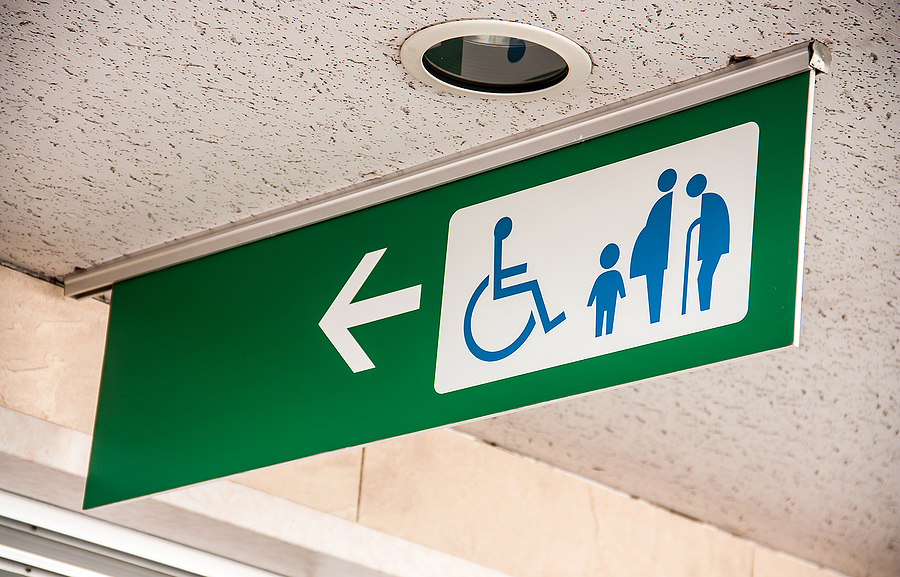
ADA signage is a category of signs designed to meet accessibility guidelines established under the ADA Standards for Accessible Design. These standards cover more than just what a sign says. They also address how the sign is made and where it is installed.
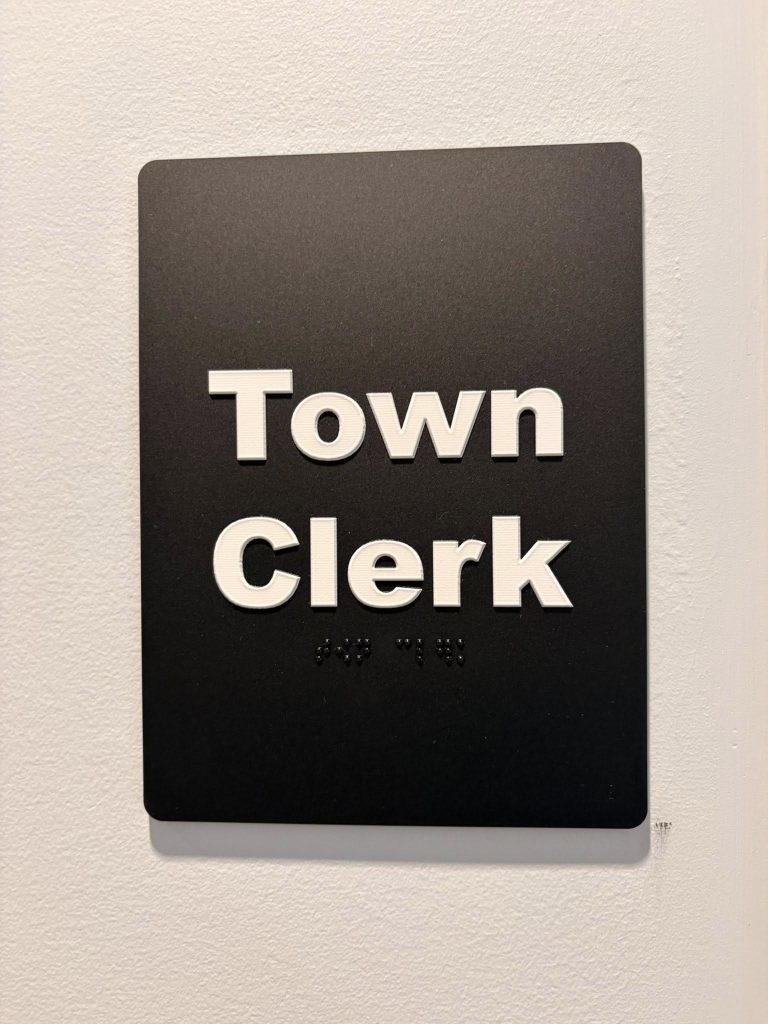
Depending on the sign’s purpose, ADA-compliant signage may need raised tactile characters, Grade 2 braille, non-glare finishes, and clear color contrast between the text and background. Placement matters too. For many tactile signs, the ADA standards specify installation on the latch side of the door and within a set height range so the sign can be located consistently and read more easily.
A common point of confusion is that not every sign in a building has to follow the exact same ADA tactile requirements. Permanent room identification signs have one set of standards, while directional, informational, and temporary signs may follow different visual rules. That is one reason it helps to work with a sign company that understands the difference.
In most buildings, ADA signage is used for spaces and features people need to identify independently and consistently. This often includes:
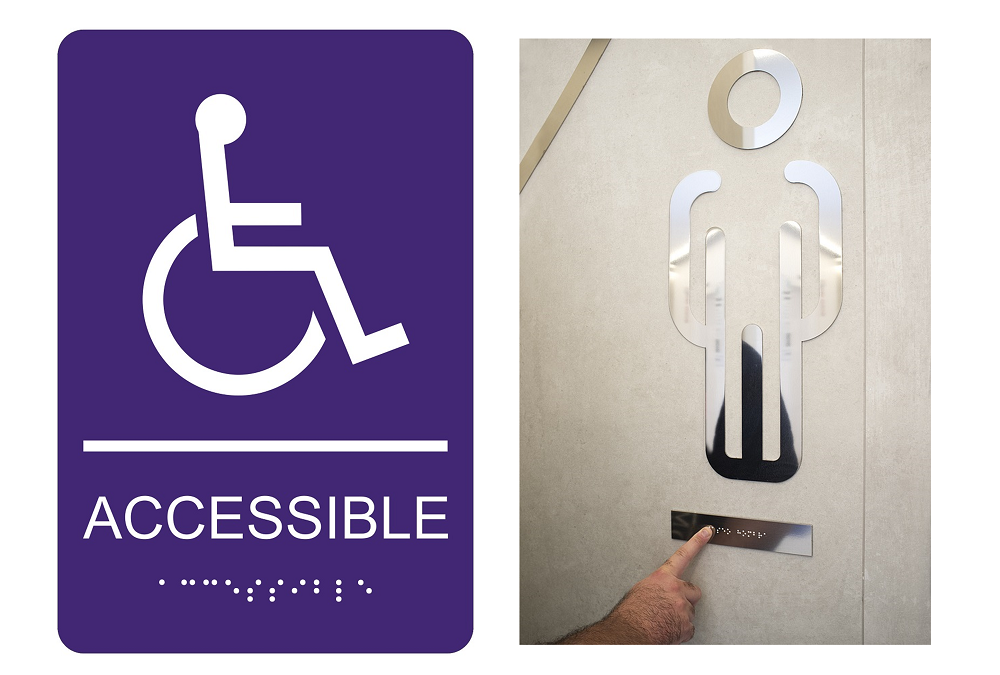
Sebago Signworks specifically notes ADA and compliance signage for items such as accessible areas, bathrooms, changing rooms, and office names and locations, which lines up closely with the types of permanent interior signs most businesses need to address.
In simple terms, most public-facing commercial buildings and many multi-use facilities need ADA-compliant signage somewhere in the building.
If your space includes permanent rooms, public restrooms, offices, exits, or accessible features, ADA signage is usually part of the overall accessibility picture. This can apply to offices, medical facilities, schools, retail stores, restaurants, apartment common areas, municipal buildings, places of worship, hotels, and many other business or public-use spaces. The ADA design standards apply to facilities covered by Title II and Title III, including state and local government buildings and places of public accommodation.
In real-world terms, if people visit your building, work in your building, or need to move through it safely and independently, ADA signage should be part of your planning.
Responsibility usually falls on the building owner, business owner, property manager, architect, contractor, or project team, depending on the type of project. For new construction and renovations, ADA signage is often addressed during design, permitting, and finish schedules. For existing buildings, signage is often updated when businesses move, rebrand, remodel, or discover compliance gaps.
This is where many businesses run into trouble. A space may look polished and professional, but still be missing required restroom signs, room identification signs, or properly installed accessible signage. It is easy for ADA signage to become an afterthought until final inspections, move-in, or a customer points out a problem.
The first reason is access. ADA signage helps people navigate a building with greater independence and confidence. That matters for customers, employees, patients, tenants, visitors, and anyone else using the space.
The second reason is compliance. Businesses are expected to provide accessible environments, and signage is one part of that. Having the right signs in the right places helps reduce risk and shows that accessibility has been taken seriously.
The third reason is professionalism. Well-made ADA signage does more than satisfy a code requirement. It creates consistency throughout your building and reflects positively on your business. When signs are clear, durable, and thoughtfully designed, your space feels more organized and more welcoming.
Not at all.
This is one of the biggest misconceptions about ADA signage. Yes, the signs need to meet accessibility requirements, but they can still align with your interior environment and your branding. A knowledgeable sign company can help you choose materials, colors, finishes, and layouts that feel polished and cohesive while still meeting the necessary standards.
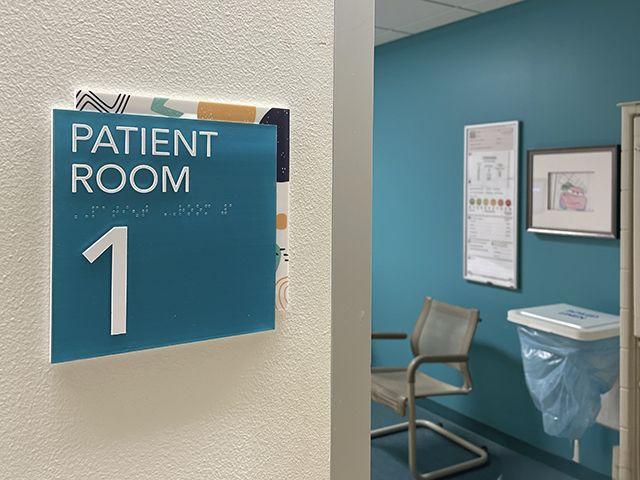
That balance matters, especially in offices, healthcare spaces, schools, hospitality settings, and commercial interiors where appearance and function both matter.
If you are unsure whether your building has the signs it needs, this is a smart time to review your space. ADA signage is not just about rules on paper. It is about considering and creating a building that works better for everyone who walks through the door.
ADA signage is one of those details that is easy to underestimate until you need it done correctly. Sebago Signworks helps businesses, organizations, and facilities create signage that is functional, compliant, and professionally produced. Our team understands interior signage, compliance signage, and the practical details that go into getting it right.
Whether you’re outfitting a new building, updating your existing offices, or making sure your interior signage is complete, working with an experienced sign partner can save time and headaches.
So, What Is ADA Signage?
It is accessible, compliant signage that helps people identify and navigate permanent spaces within a building.
Who Needs It?
Most commercial and public-facing facilities need some form of ADA signage, especially for restrooms, offices, exits, stairwells, and accessible areas.